
Can’t I Just Talk to AI?
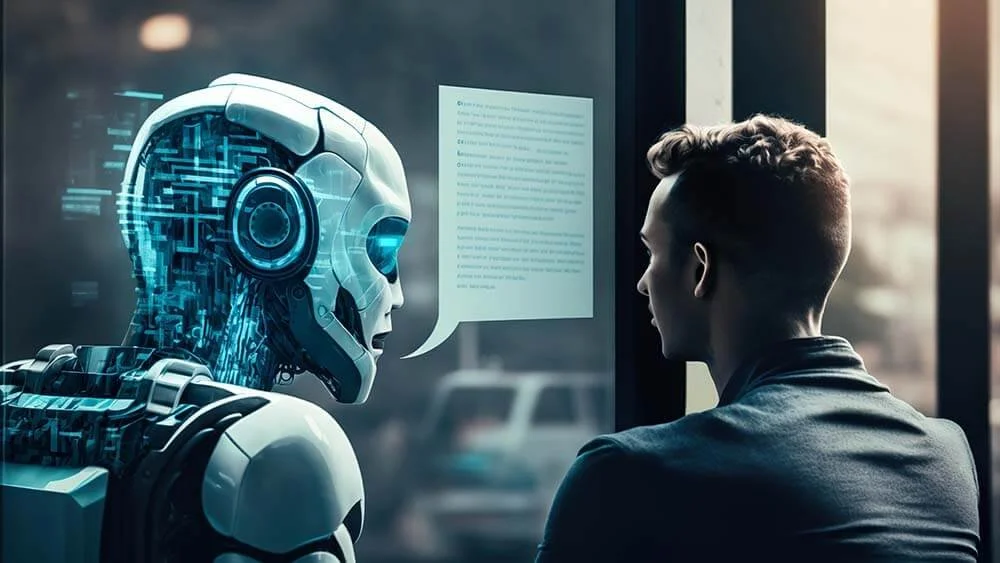
As artificial intelligence becomes more popular and sophistication, it’s normal to wonder: Do we still need human therapists? AI tools can offer coping strategies, track moods, and even simulate conversation that feels supportive.
And yet—therapy is not just about information, advice, or even reflection. At its core, therapy is about relationship. And that’s something AI cannot truly replicate.
1. Healing Happens in Relationship, Not Just Reflection
Decades of research show that the strongest predictor of positive outcomes in therapy is not a specific technique—it’s the therapeutic relationship. Feeling seen, understood, and emotionally held by another human being creates the conditions for real change.
AI can mirror language. It can validate. But it does not experience you. It does not feel your presence, notice subtle shifts in your tone, or sit with you in silence that carries meaning. Human therapists bring attunement—a relational awareness that goes beyond words.
2. Co-Regulation: Nervous Systems Healing Together
One of the most powerful (and often invisible) aspects of therapy is co-regulation—the process by which a therapist’s calm, grounded nervous system helps regulate a client’s distress.
When a client feels anxious, overwhelmed, or shut down, a therapist doesn’t just offer words—they offer presence. Through tone of voice, pacing, bodyl language, and steady attention, the therapist’s nervous system communicates safety. Over time, this helps clients internalize that sense of regulation for themselves. This is especially for clients that have experiences trauma or do not have a framework from early caregivers for validation and attunement.
This capacity doesn’t begin in adulthood—it starts at the very beginning of life. A baby cannot regulate their own emotions independently. Instead, they rely on a caregiver—often a mother or primary attachment figure—to soothe them. Through being held, rocked, spoken to gently, and responded to consistently, the baby’s nervous system begins to organize around that sense of safety.
Over time, these repeated experiences of being calmed by another person become internalized. This is how we develop the ability to self-soothe.
AI cannot co-regulate. It does not have a nervous system, a body, or an emotional state. It cannot transmit safety in a physiological way. While it may provide helpful suggestions, it cannot participate in the deeply human process of calming and organizing another person’s internal experience.
3. Humans Understand Nuance in a Lived Way
Therapists draw not only from training, but from lived human experience—culture, relationships, loss, growth, and embodiment. They can recognize when something feels off, even if it hasn’t been explicitly stated.
AI operates on data patterns. Therapists operate on presence and intuition shaped by real-world experience. This allows them to navigate complexity, contradiction, and ambiguity in ways that are deeply personal and context-sensitive.
4. Therapy Is Not Just About Answers
Many people come to therapy thinking they need solutions. But often, what they actually need is space—to process, to feel, to be witnessed without being rushed toward a conclusion.
AI is optimized to respond, to provide, to generate. Human therapists are trained to pause, to tolerate uncertainty, and to help clients discover their own meaning rather than supplying it.
5. Accountability and Ethical Responsibility
Human therapists are bound by ethical codes, licensing boards, and ongoing supervision. They are accountable for the care they provide.
AI, on the other hand, does not hold responsibility in the same way. It cannot truly assess risk, respond to crisis with clinical judgment, or be held accountable for harm in a relational sense. Therapy often involves vulnerable, high-stakes moments—these require human oversight and care.
6. Growth Requires Being Known
One of the most powerful aspects of therapy is being known over time—having someone remember your story, track your patterns, and gently reflect growth back to you.
This continuity builds trust. It allows for deeper work. It creates a shared narrative.
AI may store information, but it does not hold relationship in the same way. It does not care about you—it analyzes you.
7. AI Can Be a Tool—But Not a Replacement
This isn’t to say AI has no place in mental health. It can:
Help people access basic information easily
Offer psychoeducation and coping tools
Assist clinicians with documentation and organization
But these are adjuncts, not substitutes.
The Bottom Line
Therapy is not just a service—it’s a human experience. It’s about sitting with another person in the complexity of being alive. It’s about feeling understood in a way that changes how you understand yourself.
AI can simulate support.
Human therapists embody it.
And no matter how evolved technology becomes, that difference will always matter.